When we started integrating AI into our engineering workflow at Canviz, we were skeptical. We had heard the hype, but we needed numbers — real numbers from real projects with real clients who had no patience for slower delivery.
The Experiment
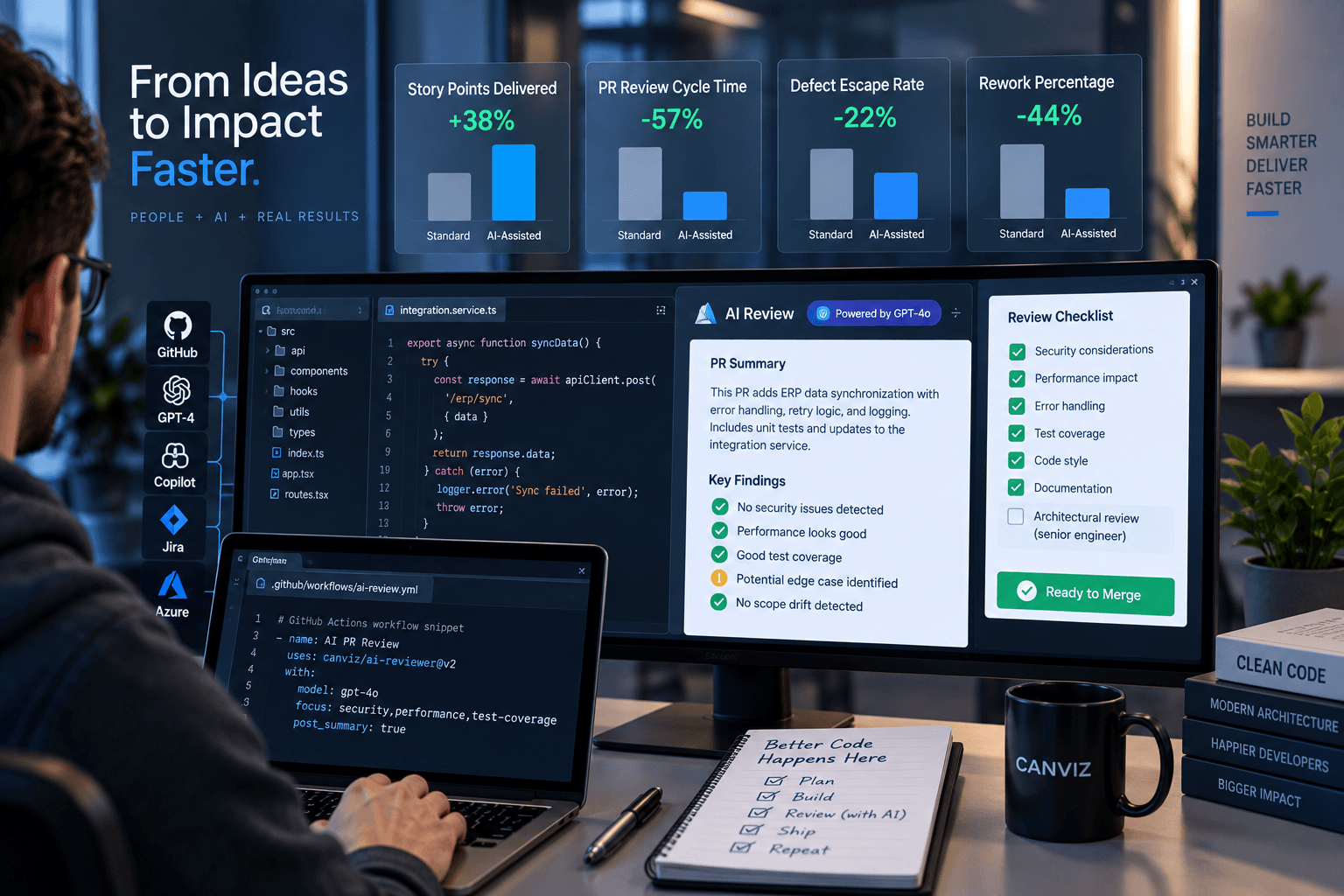
We ran a controlled comparison across three concurrent projects over a six-month period. Two teams used our standard workflow. One team — a four-person squad working on a mid-market ERP integration — adopted GitHub Copilot, GPT-4-powered code review, and an AI-assisted pull request summarizer we built internally.
The results after the first sprint were modest. By month three, the gap had widened considerably.
What We Measured
We tracked four metrics per sprint:
- Story points delivered vs. committed
- PR review cycle time — time from PR open to merge
- Defect escape rate — bugs found in QA that originated in that sprint
- Rework percentage — story points returned to the backlog due to implementation issues
The Numbers
By month six, the AI-assisted team was delivering 38% more story points per sprint against the same commitment baseline. PR review cycle time dropped from an average of 4.2 hours to 1.8 hours. Defect escape rate improved by 22%.
The rework stat surprised us most: down 44%. AI-generated PR summaries flagged scope drift and missing edge cases before reviewers even opened the diff.
The Toolchain
Here is the exact stack we used:
# GitHub Actions workflow snippet
- name: AI PR Review
  uses: canviz/ai-reviewer@v2
  with:
    model: gpt-4o
    focus: security,performance,test-coverage
    post_summary: true
We also wrote a lightweight TypeScript utility that strips the AI summary into a structured checklist, which feeds directly into our Jira integration.
What It Does Not Replace
AI-assisted review is not a substitute for a senior engineer on complex architectural decisions. It catches the obvious, accelerates the routine, and surfaces the questions a junior reviewer might miss. The senior review still happens — it just starts from a better baseline.
If you want to see how this workflow could apply to your team, we are happy to walk through it on a call.